The Lower Eastern Times Opening The Third Eye

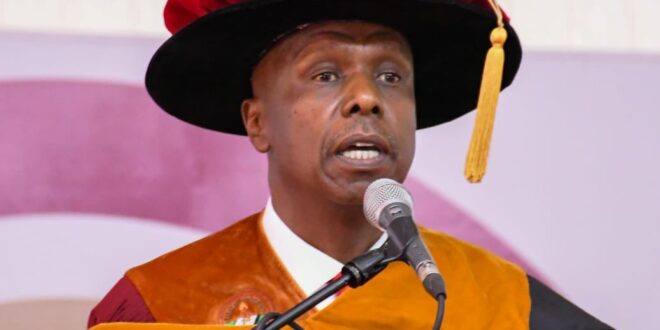
Kanu national chairman Gideon Moi has come out strongly against the government following its admission that it can no longer fully finance free education, calling it a betrayal of a key national commitment.
Click here to join our WhatsApp Channel
His criticism came shortly after Treasury Cabinet Secretary John Mbadi told Parliament that only Sh16,900 would be disbursed per student annually—far less than the previously promised Sh22,244. Mbadi, appearing before the National Assembly’s Education Committee, attributed the funding cut to financial constraints and an increase in student enrolment.
“We must be honest with ourselves. The current budget cannot sustain the Sh22,000 capitation. We lack the capacity to provide fully free primary and secondary education,” Mbadi said.
His comments drew immediate criticism from lawmakers who accused the government of reneging on its promise to make education free and accessible to all.
Secondary school principals, who had planned their budgets around the Sh22,244 allocation, are now struggling with serious shortfalls. Reports have emerged of schools sending students home, cutting co-curricular programs, or turning to fundraising efforts to stay afloat.
In response to the growing backlash, Education Principal Secretary Julius Bitok sought to reassure Kenyans that free education remains intact. Speaking during a prize-giving ceremony at St Thomas Girls Secondary School in Kilifi, Bitok reaffirmed the government’s commitment and said efforts were underway to lobby Parliament for increased funding.
“The government has no intention of abolishing free education. We are engaging Parliament to boost budget allocations for capitation and exam fees,” Bitok stated.
Despite these reassurances, Moi warned that the government’s scaling back of education funding threatens to undo one of Kenya’s most impactful achievements since independence.
“The Treasury’s recent revelation that it cannot sustain free primary education is a betrayal of a transformative national pledge that has uplifted countless lives,” he said.
Moi further accused the Kenya Kwanza administration of diverting resources to “flashy, tokenistic projects” aimed at political gain, while neglecting vital sectors like education.
“For many families, passing exams has become a bittersweet achievement as the burden of rising education costs looms. Parents are now being forced to shoulder more expenses to keep their children in school,” he added.
He also took aim at the new university funding model, calling it discriminatory and ineffective.
“The Auditor General has rightly described it as a failure of creativity. The dream of quality, accessible education is slipping away in favor of short-term political agendas,” Moi said.
“As a nation, we are punishing academic achievement instead of nurturing it. We must ask ourselves: what kind of future are we building if education is no longer a national priority?”
His remarks, made amid a worsening funding crisis in the education sector, are likely to fuel further public scrutiny and increase pressure on the government to realign its spending priorities.
The crisis comes despite the Ministry of Education receiving Sh702.7 billion— the largest share of the Sh4.2 trillion national budget for 2025–2026.