The Lower Eastern Times Opening The Third Eye
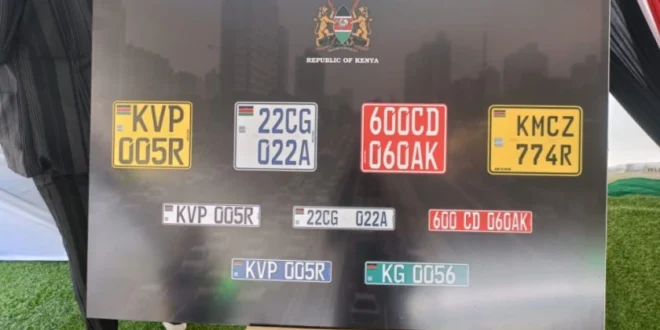
In Kenya, vehicle number plates have evolved beyond simple identification, now symbolizing status, prestige, and even investment value. Today, motorists often use registration plates not only to identify vehicles but also to estimate their age—newer series typically fetch higher resale prices.
Under the Traffic Act (Registration Plates) Rules, all plates must meet strict legal standards. Except for diplomatic vehicles, plates must display the national flag, a security hologram on the left, and optically recognisable characters.
Vehicles (other than motorcycles or trailers) must have a front and rear plate mounted horizontally.
Click here to join our WhatsApp Channel
Number plates are issued by the National Transport and Safety Authority (NTSA). Since late 2022, Kenya has adopted a new-generation design: white rectangular or square plates with black lettering, a Kenyan flag, and an embedded QR code to curb fraud and improve traceability.
Plates follow a sequential format—LLL NNNL—where letters and numbers indicate registration order, moving from older series like KAA in the 1980s to current sequences like KDD. Once a series is exhausted, NTSA introduces the next to ensure unique vehicle identification.
Motorists can apply for various types of plates based on preference and budget:
- Ordinary plates: Sh3,050 via eCitizen.
- Special plates: Sh30,000, allowing preferred letter/number combinations across multiple vehicles.
- Personalised plates: Sh1 million, letting applicants create unique patterns, often reflecting names or companies.
NTSA automatically marks unavailable numbers if already taken.
There are five main categories of number plates: civilian, Government of Kenya (GK), parastatal, local authority, and diplomatic. Civilian plates are black on white, while diplomatic plates are red with white letters. Diplomatic numbers are assigned in order of recognition of Kenya’s independence—for example, Germany (then West Germany) holds 1 CD. A typical diplomatic plate reads “5 CD 18 K,” where the first digit is the country code, “CD” denotes a diplomat, numbers indicate rank, and “K” signifies Kenya.
Other special categories include:
- UN vehicles: Red reflective plates with white embossed characters and a specific coding system.
- State corporations: White letters on blue reflective sheets.
- Trailers: Prefix “Z” on yellow reflective material.
- Motorcycles: Prefix “KM” on yellow reflective sheets.
- Tractors, heavy machinery, three-wheelers: Prefixes “KTC,” “KHM,” “KTW” respectively.
- Dealers and tow trucks: Prefixes “KD” (green reflective) and “KT.”
- Government vehicles: Prefix “GK” with black on white (front) and yellow (rear).

Kenya has also introduced green plates for electric vehicles under the National Electric Mobility Policy. Launched on February 3, 2026, these plates mark zero-emission vehicles and will be displayed on both the front and rear, highlighting the government’s climate action agenda.
Overall, Kenyan number plates serve multiple purposes: identification, status, traceability, and now environmental distinction for electric vehicles.