 The Lower Eastern Times Opening The Third Eye
Related Articles



A preliminary investigation into last month’s fatal Air India crash — the deadliest aviation disaster globally in a decade — suggests cockpit confusion over engine fuel cutoff switches as a possible factor in the accident that killed 260 people.
Click here to join our WhatsApp Channel
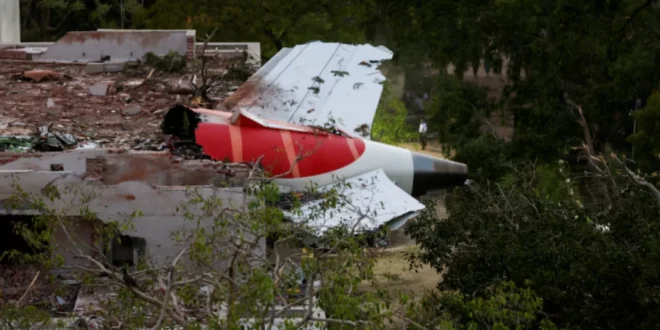
The Boeing 787 Dreamliner, en route from Ahmedabad to London, experienced a rapid loss of thrust and began descending shortly after takeoff on June 12.
A report by India’s Aircraft Accident Investigation Bureau (AAIB), released Saturday, highlights uncertainty surrounding how both engine fuel switches flipped to the cutoff position moments after takeoff, cutting off fuel to the engines.
Closed-circuit footage showed a ram air turbine — a backup power source — deploying shortly after liftoff, indicating engine power loss. Audio from the cockpit captured one pilot asking the other why the fuel had been cut off, with the second pilot denying having done so. The report did not identify which pilot made which statement or who issued the “Mayday” distress call.
The aircraft’s captain, Sumeet Sabharwal (56), had logged over 15,000 flight hours and served as an Air India instructor. His co-pilot, Clive Kunder (32), had 3,403 hours of experience.
Though the switches reportedly moved to cutoff within a second of each other, the report does not explain how this occurred. Experts say such switches are not easily triggered by mistake and are normally only used during shutdowns at the gate or in emergencies like an engine fire — which was not indicated in the report.
Interestingly, both fuel switches were found in the ‘run’ position at the crash site, suggesting the engines may have restarted briefly before the low-altitude impact. The Dreamliner had reached about 650 feet before plummeting and crashing into a building, clipping trees and a chimney along the way.
The U.S. National Transportation Safety Board acknowledged India’s investigation and noted that the report did not recommend any action for other Boeing 787 operators or GE engine users. The FAA said it was closely monitoring the investigation to address any safety concerns. Boeing stated it is supporting the ongoing probe, while GE Aerospace did not issue a comment.
The AAIB, part of India’s civil aviation ministry, is leading the inquiry. Preliminary reports are typically released within 30 days of a crash, with a final report expected within a year.

The crash poses a significant setback for Tata Group’s efforts to revamp Air India since taking over in 2022. The airline, along with its low-cost subsidiary Air India Express, is now facing increased scrutiny — including an upcoming European Union probe into alleged safety and compliance violations involving falsified records and overdue engine part replacements.
India has been positioning itself as a rising global aviation hub, but the crash raises serious questions about safety and operational standards as the country expands its air travel ambitions.