 The Lower Eastern Times Opening The Third Eye
Related Articles



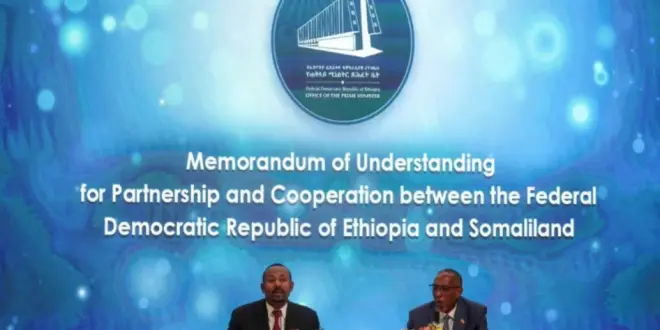
On Tuesday, Somalia rejected an agreement between its breakaway region, Somaliland, and Ethiopia, which allowed Ethiopia to utilize a significant port providing access to the Red Sea. The deal, signed by Ethiopian Prime Minister Abiy Ahmed and Somaliland leader Muse Bihi Abdi, proposed a 50-year lease of approximately 20 km around the port of Berbera for Ethiopia’s naval and commercial purposes. In exchange, Ethiopia would recognize Somaliland as an independent nation, marking the first such recognition.
Somalia, considering Somaliland part of its territory, dismissed the pact, stating it had no legal validity. Somalia also summoned its ambassador to Ethiopia for discussions on the matter. The agreement raised tensions as Ethiopia seeks Red Sea access, potentially leading to conflicts in the Horn of Africa. In October, Abiy emphasized Ethiopia’s connection to the Red Sea, emphasizing the need for balanced regional sharing.
Somalia’s President Hassan Sheikh Mohamud declared the deal an open interference with Somalia’s sovereignty and unity. He asserted that no one had the authority to relinquish a part of Somalia. Mohamud rejected Ethiopia’s recognition of Somaliland, emphasizing that Ethiopia’s claim of recognition did not hold true.
Ethiopia’s national security adviser suggested offering Somaliland a stake in Ethiopian Airlines in exchange for Red Sea access. However, the details of the stake remain unclear. The Somali government and Somaliland recently agreed to restart talks to resolve disputes, with Djibouti leading mediation efforts.
Somaliland’s interior minister, Mohamed Kahin, expressed discontent with Somalia’s position, urging an apology for claiming Somaliland as part of Somalia. Somaliland, which declared autonomy in 1991, lacks widespread international recognition. The Ethiopian government spokesperson, spokespersons for Abiy’s office, and the foreign affairs ministry did not immediately respond to requests for comments.