The Lower Eastern Times Opening The Third Eye
A recent Senate report has revealed widespread ethnic bias in hiring practices within county governments, with Bomet, Elgeyo Marakwet, and Kirinyaga topping the list of counties that heavily favor one ethnic group in public employment.
Click here to join our WhatsApp Channel
Bomet County emerged as the most non-compliant, with 97.28% of its workforce made up of individuals from the Kalenjin community. The report, compiled using data from county administrations and the National Cohesion and Integration Commission (NCIC), highlights similar trends in Elgeyo Marakwet (96.3% Kalenjin) and Kirinyaga (96% Kikuyu).
These counties have surpassed the legal ethnic representation limit set by the County Governments Act, which prohibits any single community from occupying more than 70% of county jobs.
Other counties showing similar imbalances include Nandi (95.67% Kalenjin), Nyamira (95% Kisii), Nyandarua (95.57% Kikuyu), Kisii (94.3% Kisii), and Kericho (93.3% Kalenjin). The report also cites cases where public forums are held in the dominant ethnic language, further alienating minority groups.
The Senate committee warned that this trend undermines national unity and violates Article 232 of the Constitution, which requires fairness and diversity in public service appointments.
Counties such as West Pokot (93.57% Kalenjin), Nyeri (93.66% Kikuyu), and Wajir (93.1% Somali) were also named among those with little representation from minority communities, creating significant barriers to inclusion.
“Devolution was intended to distribute power and resources more equitably, not to reinforce ethnic strongholds,” the report noted.
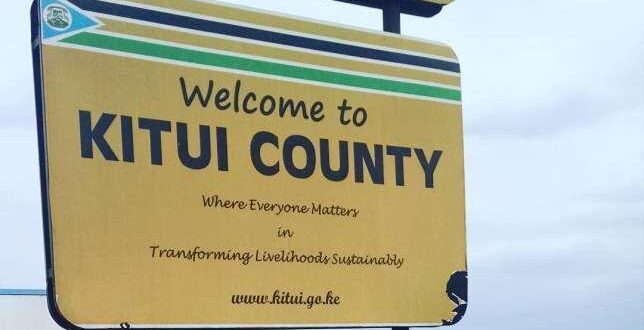
In Eastern Kenya, Kitui (90%) and Makueni (92.63%) have overwhelmingly Kamba workforces. Central Kenya also mirrors the trend, with Murang’a at 93.7% Kikuyu.
Western and Nyanza counties such as Kakamega (90.68% Luhya), Vihiga (89.79% Luhya), Kisumu (87.69% Luo), Homa Bay (76.98% Luo), and Migori (71.77% Luo) also exceed the legal limit.
Rift Valley counties like Baringo (92.93% Kalenjin) and Uasin Gishu (over 80% Kalenjin), and northern counties like Garissa (80.15% Somali), Mandera (81.4% Somali), and Samburu (76.65% Samburu), reflect similar patterns of ethnic overrepresentation.
The Coast region is no exception, with Kwale (75.2% Mijikenda) and Kilifi (79% Mijikenda) showing strong ethnic concentration. Kajiado, at 70.53% Maasai, just barely meets the legal requirement.