The Lower Eastern Times Opening The Third Eye
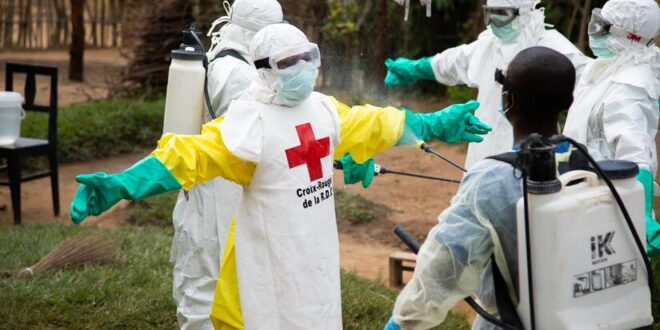
Uganda has confirmed two additional Ebola infections, pushing the total number of cases linked to the current outbreak to seven.
According to Uganda’s Director General of Health Services, Charles Olaro, the newly confirmed patients are healthcare workers attached to a private medical facility in Kampala.
Click here to join our WhatsApp Channel
Olaro said both patients have been isolated in a designated treatment centre where they are receiving medical care, while health response teams continue tracing and monitoring all individuals who may have come into contact with them.
He also appealed to the public to report anyone showing Ebola-related symptoms to the nearest hospital, stressing that early diagnosis and treatment increase survival chances and help contain the spread of the disease.
The latest cases come amid growing concern in neighbouring Democratic Republic of the Congo, where authorities say suspected Ebola infections have sharply increased.
Officials in DR Congo reported 904 suspected cases and 119 suspected deaths by Sunday, marking a steep rise from previous figures of over 700 suspected infections.
The World Health Organization has since declared the Bundibugyo strain outbreak a Public Health Emergency of International Concern after cases were detected in the Mongbwalu Health Zone in Ituri Province.
Tests conducted by the Institut National de Recherche Biomédicale in Kinshasa confirmed Bundibugyo virus disease in eight samples collected from Ituri Province.
Health experts note that unlike some other Ebola strains, there is currently no approved vaccine or specific treatment for Bundibugyo virus disease, although supportive medical care can greatly improve survival rates.
WHO has classified the outbreak as posing a very high risk within DR Congo but maintained that the risk of wider international spread remains low.
In response, Kenya has intensified Ebola surveillance and screening measures at border entry points, including the Busia border with Uganda.
Uganda first confirmed the outbreak on May 15 after a Congolese man died in Kampala shortly after arriving from DR Congo.
The first cluster emerged after a Congolese woman sought treatment in Uganda, with a local driver who transported her later testing positive for the virus.
WHO says Bundibugyo virus disease is a severe and often deadly form of Ebola believed to originate from fruit bats, which are considered the virus’s natural hosts.
The disease spreads through close contact with infected animals or direct exposure to bodily fluids, blood, organs, or contaminated surfaces from infected individuals.
Poor infection control in healthcare settings and unsafe burial practices can also contribute to transmission.
Symptoms can appear between two and 21 days after infection and usually begin with fever, fatigue, muscle pain, headache, and sore throat before progressing to more severe complications.
Past outbreaks of the Bundibugyo strain have recorded fatality rates of between 30 and 50 per cent.