The Lower Eastern Times Opening The Third Eye

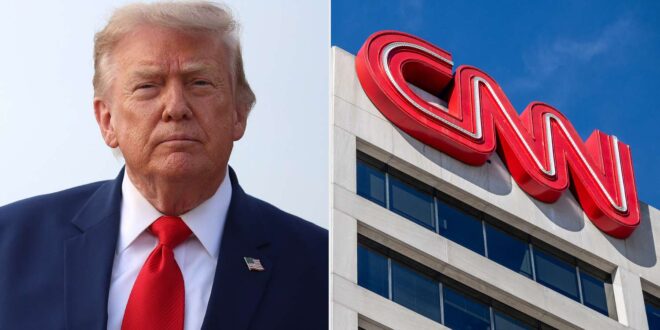
US President Donald Trump has announced plans to immediately bar CNN, MS NOW and Politico from the White House, escalating his long-running tensions with several major news organisations.
In a Friday post on Truth Social, Trump accused the three outlets of repeatedly publishing or broadcasting what he described as false information about his administration. He did not, however, identify specific reports that prompted the decision.
Click here to join our WhatsApp Channel
Trump later described the move as a “very simple ban” but did not provide details on how it would be implemented or whether journalists from the affected organisations would be denied access to the White House grounds.
Shortly after the announcement, reporters from CNN and Politico were still present at the White House. A CNN crew was also travelling with Vice-President JD Vance to an event in Iowa.
CNN criticised the proposed ban, describing it as an attack on press freedom and arguing that journalists have a constitutional right to report from the White House without government interference.
The network said it stood behind its White House team and its reporting, adding that any attempt to prevent its journalists from covering the administration could face legal challenges.
Politico similarly said it would continue reporting on the Trump administration and future governments, while pledging to defend its First Amendment rights against efforts to restrict its journalists.
MS NOW, formerly known as MSNBC, declined to comment on the announcement.
Trump suggested that additional news organisations could also face similar restrictions. When asked which outlets he had in mind, he pointed to The New York Times and The Washington Post, calling both “fake news.”
White House Correspondents’ Association President Jacqui Heinrich defended journalists who she said were being targeted for carrying out their professional duties.
Heinrich said the issue extended beyond journalists’ rights, arguing that the public also has a right to receive independent information about the activities and decisions of the administration.
Later, while speaking in the Oval Office, Trump said his decision was based on what he described as years of accumulated reporting that had frustrated him.
He also acknowledged that his proposed action could face legal challenges, saying he believed it was important to make his position known regardless of whether it ultimately survived legal scrutiny.
The announcement comes amid continuing tensions between Trump and sections of the White House press corps since he returned to office in January 2025.
During his second term, the administration has sought to broaden access to the White House press room by including conservative bloggers, influencers and other media organisations, arguing that doing so would bring a wider range of perspectives to the American public.
In February, the White House announced that it would take control of the press pool that provides journalists with access to the president. The pool had traditionally been managed by the White House Correspondents’ Association.
The administration also restricted access for Associated Press journalists after the news agency continued using the name “Gulf of Mexico” rather than “Gulf of America.” The AP subsequently sued, with the case still pending.
Trump has frequently clashed with journalists during Oval Office meetings, Air Force One flights and other presidential events, often criticising reporters and accusing them of producing “fake news.”
During his first term, Trump also revoked the White House credentials of CNN correspondent Jim Acosta. CNN challenged the decision in court, after which Acosta’s credentials were restored.
CNN is among a small number of US news organisations responsible for providing video coverage as part of the White House press pool, allowing other media outlets to use footage from presidential events.
The announcement has also drawn criticism from press freedom and legal organisations.
The Knight First Amendment Institute at Columbia University argued that excluding news organisations from the White House press pool because of their reporting would raise serious First Amendment concerns.
The Reporters Committee for Freedom of the Press also said it expected any such ban to face strong legal challenges, arguing that the government cannot exclude journalists simply because it disagrees with their coverage.
The Freedom of the Press Foundation similarly criticised the move and said restricting journalists based on their reporting would violate constitutional protections.
Trump has previously taken legal action against several US and international media organisations, including The Wall Street Journal, The New York Times and the BBC.
Some of those disputes have ended in multimillion-dollar settlements, while Trump’s lawsuit against the BBC remains ongoing.