The Lower Eastern Times Opening The Third Eye

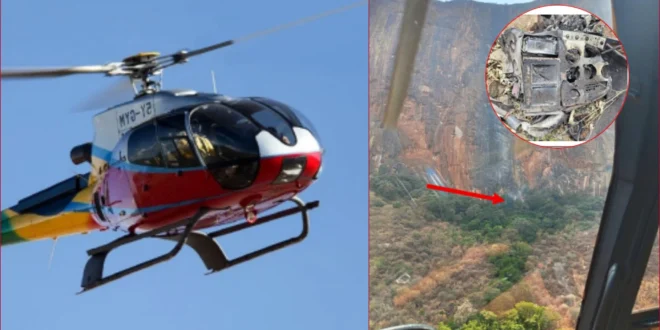
A preliminary investigation into the helicopter crash at Mount Ololokwe in Samburu County has revealed that the aircraft’s landing gear skid struck a rock formation near the summit while the pilot was flying at low altitude close to the mountain’s cliff face.
The August 19, 2026 accident killed all seven people aboard the helicopter, which was destroyed by the impact and a fire that broke out after the crash.
Click here to join our WhatsApp Channel
According to a preliminary report by the Aircraft Accident Investigation Department (AAID), the helicopter went down at approximately 9:13am after descending the mountainside and falling over a cliff.
The victims were identified as pilot Josh Outram, former Ecuadorian Chief of Intelligence Michele Sensi Contugi, his wife Stephany Holihan, Roger Edward Duarte, José Alberto Suárez, Adam Hlavaty and Henry Parra.
Investigators found marks on the ground consistent with the landing gear skid striking a protruding rock near the summit.
The impact caused the landing gear assembly to separate from the helicopter. The aircraft’s fuselage and remaining structure then travelled uncontrollably down the steep slope before plunging over the cliff and coming to rest at its base.
The report identified two main wreckage locations. The first was on the steep slope around the initial impact point and covered an area of about 25 metres by 50 metres. The second, at the bottom of the cliff, measured approximately 25 metres by 15 metres.
Parts of the helicopter, including a landing gear skid, door gas strut and left cargo door, were recovered at varying distances from the initial impact point.
Investigators also found paint transferred onto rocks, indicating that the fuselage struck and slid along the terrain. Debris patterns and marks on vegetation and rocks suggested that the main rotor also made contact with the ground.
Some wreckage was moved to a central location near the mountain’s summit by local first responders, while the remaining parts fell over the cliff and were extensively damaged by the impact and subsequent fire.
Although broken, the main rotor blades remained attached to the rotor mast. The tail rotor and tail boom were among the components that remained relatively intact.
Final moments of the flight
The helicopter had departed Loisaba Conservancy in Samburu earlier that morning with only the pilot aboard, heading to Suyian Conservancy for a scheduled scenic flight.
At Suyian, the pilot picked up six passengers before flying towards the Ewaso Nyiro River. After spending time there, the aircraft proceeded to Mount Ololokwe, where the passengers were scheduled to have breakfast.
Flight tracking data showed that the helicopter reached the mountain at about 9:12am and began flying parallel to the cliff face, apparently allowing the passengers to view the scenery and take photographs.
The pilot then circled back along the cliff, made a right turn and climbed above the ridgeline.
The helicopter subsequently entered a 180-degree left turn down the steep slope. During the manoeuvre, the landing gear skid struck a protruding rock formation near the summit.
The impact sheared off the landing gear assembly, sending the aircraft’s remaining structure down the mountainside and over the cliff.
The helicopter eventually came to rest approximately 1,196 feet from the initial point of impact.
At the time of the accident, investigators established that visual meteorological conditions prevailed in the area.
Pilot had valid licence
Records supplied by the operator showed that Outram, 36, held a valid Commercial Pilot Licence for helicopters issued by the Kenya Civil Aviation Authority (KCAA) on December 7, 2025.
His licence was valid until December 6, 2026 and included type ratings for Robinson R44, Robinson R66 and Airbus EC130 helicopters.
He also held a valid Class 1 Medical Certificate without limitations.
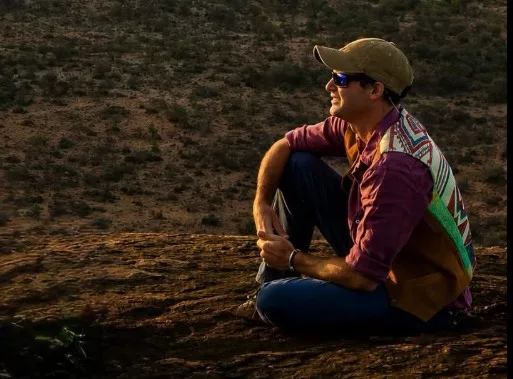
The pilot had accumulated 5,201.3 flight hours, including 3,453 hours on fixed-wing aircraft.
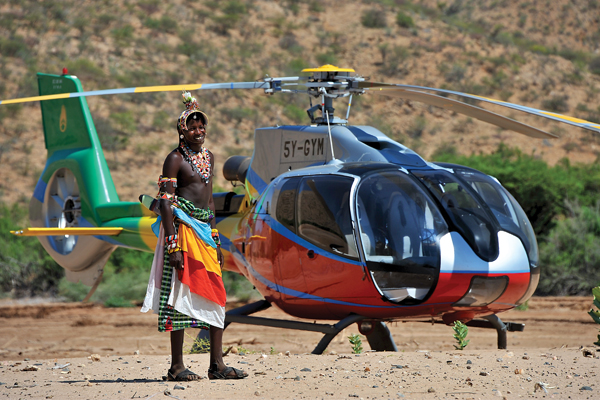
The helicopter was a light, single-engine aircraft powered by a Turbomeca Arriel 2B1 turboshaft engine. It featured a three-bladed main rotor and a Fenestron tail rotor system.
The aircraft was configured to carry one pilot and six passengers and had a maximum take-off weight of 2,427 kilogrammes.
Investigation ongoing
Transport Cabinet Secretary Davis Chirchir said AAID investigators were dispatched to the crash site immediately after the accident in accordance with Annex 13 of the Convention on International Civil Aviation.
The investigation included an examination of the wreckage and interviews with witnesses.
The AAID classified the incident as an accident under International Civil Aviation Organization (ICAO) Annex 13 requirements.
Several international aviation investigation agencies were subsequently notified because citizens of their respective countries were among those killed.
These included France’s Bureau d’enquêtes et d’analyses (BEA), Ecuador’s accident investigation authority, the United States National Transportation Safety Board (NTSB), the UK’s Air Accident Investigation Branch (AAIB), Italy’s Agenzia nazionale per la sicurezza del volo (ANSV) and the ICAO.
Airbus Helicopters, Safran Helicopter Engines and the European Union Aviation Safety Agency (EASA) were also notified and assigned technical advisers to assist with the investigation.
Investigators are still examining the circumstances surrounding the accident, including the aircraft’s weight and centre of gravity at different stages of the flight.
The assessment will consider the helicopter’s loading configuration, fuel levels and distribution, passenger and cargo weight, and any changes in mass and balance during the flight.
Maintenance records reviewed by investigators showed that the helicopter’s latest inspections and maintenance checks had been conducted by Lady Lori Engineering Ltd, an approved maintenance organisation based at Wilson Airport in Nairobi.
The AAID said the investigation remains ongoing and is intended to establish the probable causes and contributing factors behind the crash.
The department emphasised that the investigation’s objective is to prevent similar accidents in future rather than assign blame or legal liability.