The Lower Eastern Times Opening The Third Eye

By: Caren Litiema, Laikipia University
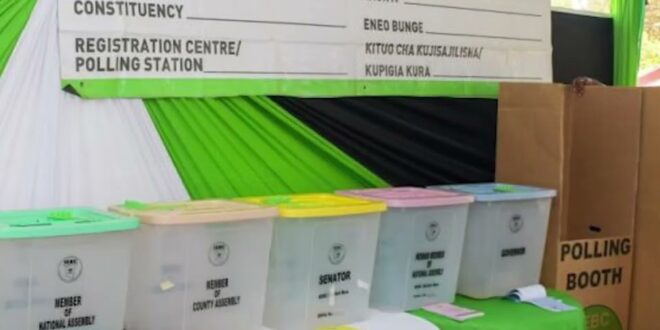
As Kenya moves closer to its next general elections, attention is increasingly focused on the Independent Electoral and Boundaries Commission (IEBC).
Citizens, political parties, and civil society groups are raising a crucial question: Is the electoral body adequately prepared to conduct elections that are free, fair, and transparent? The issue is particularly significant given the country’s history of disputed results, allegations of irregularities, and election-related tensions. Public trust in the electoral process remains vital not only for political stability but also for economic development, national unity, and the credibility of Kenya’s democratic institutions.
Click here to join our WhatsApp Channel
Opposition leaders have voiced concerns regarding the planned use of Smartmatic vote-counting technology, cautioning that heavy reliance on electronic systems could affect accuracy if not independently verified. Electoral officials, however, maintain that digital systems help minimize human errors while improving efficiency.
Despite these reassurances, doubts persist among some stakeholders, especially over potential political interference, the spread of misinformation, and whether security agencies are fully prepared to handle possible election-related unrest. Many Kenyans worry that logistical challenges, delayed announcements of results, or technical malfunctions could trigger tensions similar to those experienced in previous election periods.
Historically, disputes surrounding election outcomes have weakened public confidence in governance. Controversies over results have sometimes led to protests, demonstrations, and violent confrontations, disrupting both daily life and economic activity. Analysts therefore stress the need for a broad strategy that includes conflict-prevention initiatives, stronger security preparedness, and constructive dialogue among political actors. Independent election observers and responsible media coverage are also viewed as essential in ensuring transparency and discouraging electoral malpractice.
Click Here To Subscribe To Our YouTube Channel
Equally important is voter education and participation. Although awareness campaigns have increased, many citizens still lack complete understanding of their voting rights and procedures. Civil society groups, community leaders, and media organizations must therefore play an active role in educating the public, particularly in rural and marginalized regions. Providing citizens with accurate information can strengthen confidence in the electoral system and reduce the likelihood of disputes after the polls.
Technology is also transforming how elections are managed in Kenya. Tools such as digital voter registration, biometric identification, and electronic vote tallying are increasingly used to improve transparency and efficiency.

However, these developments also raise questions about cybersecurity, system reliability, and accessibility in remote locations. The concerns surrounding Smartmatic systems highlight the need for transparent verification processes and clear communication to the public about how the technology functions.
Ultimately, Kenya stands at a crucial point in its democratic development. The forthcoming elections offer an opportunity to reinforce democratic progress, strengthen institutions, and maintain political stability.
Achieving this will depend on the IEBC’s ability to manage a transparent and accountable process, alongside the commitment of political leaders, citizens, and civil society to uphold peace and integrity during the electoral process. Allowing every Kenyan to vote freely and confidently will be the ultimate measure of the country’s democratic strength.