The Lower Eastern Times Opening The Third Eye

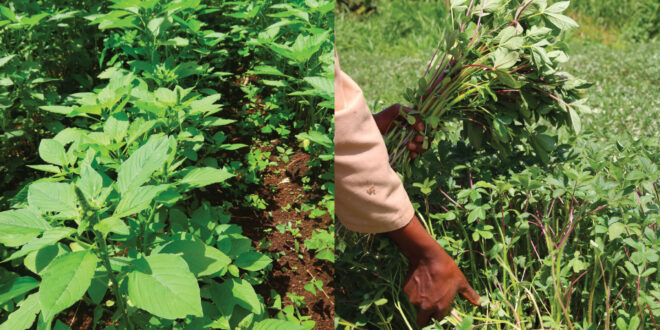
Farmers in Lugari Sub-county, Kakamega County, are increasingly turning to traditional vegetables as a lucrative source of income, driven by rising demand from consumers who are becoming more aware of the crops’ nutritional and health benefits.
Once regarded as food mainly consumed by low-income households, indigenous vegetables such as black nightshade (managu), amaranth (terere), spider plant (saga), cowpea leaves (kunde), and pumpkin leaves are now gaining popularity and fetching better prices than common vegetables like kale and cabbage.
Click here to join our WhatsApp Channel
Farmers say the crops are attractive because they mature quickly, can be harvested multiple times, and have a readily available market.
Peter Wekesa, a farmer from Lumakanda, said he begins harvesting within a short period and rarely struggles to find buyers since traders often purchase the produce directly from the farm.
According to Wekesa, a 90-kilogram sack of indigenous vegetables can fetch between Sh3,500 and Sh5,000 depending on the season and variety, significantly higher than the prices earned from kale and cabbage.
Traders are also reporting growing demand. Mary Nanjala, who sells vegetables at Lumakanda Market, said supplies are increasingly insufficient despite the growing customer base.
She noted that while traditional vegetables were once abundant, traders now struggle to secure enough stock, with most of her produce being sold out early in the morning.
Lugari Sub-county Agriculture Officer Kakai Wekesa said changing eating habits and growing health consciousness have transformed indigenous vegetables from subsistence crops into profitable commercial ventures.
He explained that the vegetables are rich in essential nutrients, including iron, calcium, vitamins A and C, and antioxidants, making them increasingly popular among consumers seeking healthier diets.
The agriculture officer added that the crops require fewer chemical inputs, mature faster, and allow multiple harvests, giving farmers a consistent source of income throughout the year.
He attributed the growing market to increased nutrition awareness, renewed interest in traditional foods among urban consumers, and the inclusion of indigenous vegetables in menus at schools, hospitals, and hotels.

Despite the strong demand, production levels remain below market needs.
Agricultural experts cite challenges such as shrinking land sizes, prolonged droughts, erratic rainfall patterns, declining kitchen gardens, and the growing preference for exotic crops as factors limiting production.
According to the Kenya Agricultural and Livestock Research Organization (KALRO), African indigenous vegetables play a key role in improving household nutrition while offering small-scale farmers a profitable and cost-effective farming enterprise. The crops are also better suited to withstand changing weather conditions compared to many exotic vegetables.
To address the supply shortage, Kakai Wekesa is encouraging farmers to embrace commercial production, invest in irrigation, and form producer groups to improve output and access to markets.
He said organized farmer groups and improved irrigation systems would help meet the rising demand while boosting household incomes and enhancing food security.
As consumer demand continues to grow, traditional vegetables are increasingly shedding their reputation as subsistence crops and are emerging as one of the fastest-growing agribusiness opportunities in Lugari.
By: KNA