The Lower Eastern Times Opening The Third Eye

Africa’s leading public health agency has sought to reassure the public following the confirmation of Kenya’s second Ebola case, noting that infections among identified and monitored contacts do not automatically indicate that the outbreak is spreading beyond control.
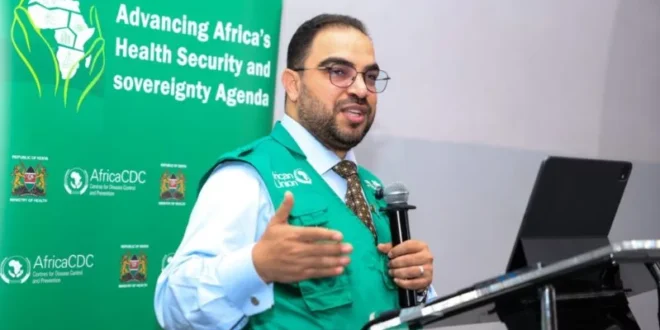
Dr. Wessam Mankoula, director of the Centre for Disease Preparedness and Response at the Africa Centres for Disease Control and Prevention (Africa CDC), said the greater concern would arise if new patients were identified without any known connection to previously confirmed cases.
Such infections could indicate that the virus was spreading undetected within the community, making it more difficult for health authorities to contain the outbreak.
Mankoula explained that additional infections among people already listed as contacts would be less alarming because health officials knew their identities and were monitoring them for symptoms.
He said the situation would remain more manageable even if several identified contacts tested positive, provided they were promptly isolated and appropriately managed.
His remarks followed Kenya’s confirmation of its second Bundibugyo Ebola case on Wednesday. The patient is a 39-year-old man who is a close family member of the first patient, who died in Nairobi on October 5.
The second patient developed symptoms on October 13 while in quarantine, prompting his isolation and subsequent testing.
The Ministry of Health said the development demonstrated that contact tracing and monitoring measures were functioning, adding that there was no evidence of wider community transmission.
Mankoula said understanding how new infections emerge was essential in determining whether an Ebola outbreak was being effectively controlled.
When cases occur among known contacts, health teams can establish possible exposure routes, isolate infected individuals and monitor others who may have contracted the virus.
However, he warned that a growing number of infections among people who were not on existing contact lists could signal gaps in surveillance and indicate that some transmission chains had gone undetected.
He made the remarks during a media forum organised by the Ministry of Health, Africa CDC and Willow Health.

Kenya Tracks Contacts Linked to First Ebola Case
By October 13, Kenyan health authorities had identified 128 contacts associated with the first patient.
Of these, 113 had been traced, with 108 placed under quarantine in Kenya and another five located outside the country. Efforts to locate the remaining 15 contacts were ongoing, according to the ministry.
Despite the second patient being identified through contact tracing, pathologist Dr Ahmed Kalebi said the development marked a significant change in Kenya’s outbreak status.
Kalebi, who heads DKL Laboratories in Nairobi, said the confirmation meant the country was now officially experiencing local Ebola transmission.
He noted that identifying the second patient while he was already in quarantine was a positive development, but cautioned that this alone was insufficient to establish that the outbreak had been contained.
The pathologist called on the Ministry of Health to provide consistent public updates on people under surveillance and the ongoing efforts to trace outstanding contacts.
He said the second patient’s quarantine had enabled health workers to isolate, test and manage him promptly after symptoms appeared on October 13.
However, he stressed that the response could not be considered successful until containment was established.
Kalebi also emphasised that all identified contacts must complete the 21-day monitoring period, calculated from their last potential exposure to the virus.
He further urged health authorities to closely monitor individuals who might have come into contact with the second patient after his symptoms began.
According to the pathologist, timely and transparent communication would be crucial in maintaining public confidence throughout the response.
He noted that even updates confirming there were no new infections would help keep the public informed and strengthen trust in the surveillance system.
Health Officials Urge Public to Recognise Ebola Symptoms
Health experts have cautioned that Ebola does not always cause bleeding, despite the common association between the disease and haemorrhagic symptoms.
Initial signs can resemble influenza and include fever, fatigue, headaches, muscle aches and joint pain. Some patients may later develop vomiting, diarrhoea and other severe complications.
Because these symptoms can resemble other illnesses, including malaria, laboratory testing is necessary to confirm an Ebola infection.
The Ministry of Health says early supportive treatment, including fluid replacement and management of symptoms, can improve a patient’s chances of survival.
Members of the public who develop symptoms after possible exposure to the virus have been urged to seek medical attention without delay.
Ebola spreads through direct contact with the blood or other bodily fluids of an infected person who has developed symptoms, or through contact with the body fluids of someone who has died from the disease.
Kenya Maintains Open Travel and Public Activities
The Ministry of Health has maintained that Kenya remains open, with no restrictions imposed on travel, trade or public gatherings.
Authorities have urged residents to remain calm, follow official health guidance and avoid spreading unverified information about the outbreak.
The public has also been advised to call the toll-free number 719 for further information and guidance on Ebola.
Health officials continue to rely on contact tracing, quarantine, early detection and prompt isolation to prevent further transmission and bring the outbreak under control.