The Lower Eastern Times Opening The Third Eye

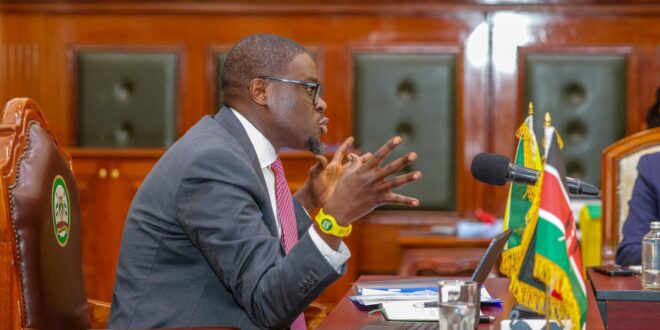
Nairobi Governor Johnson Sakaja on Monday chaired the first meeting following the signing of a cooperation agreement between Nairobi City County and the national government.
Speaking to the press, Sakaja said the arrangement is provided for under the Urban Areas and Cities Act but has never been put into practice before.
Click here to join our WhatsApp Channel
He explained that while Nairobi operates as a devolved county, it also serves as Kenya’s capital city and the seat of the national government.
“We host the diplomatic community, and therefore the infrastructure that supports the capital and the national government requires close coordination,” Sakaja said.
According to the governor, Nairobi cannot be managed and funded like other counties or rely solely on the equitable share allocation distributed to counties.
Sakaja described the agreement as a major milestone that will allow the two levels of government to work together more effectively. He noted that the deal went through public participation on February 26 at City Hall and on February 27 across the county’s 17 sub-counties.
Residents, he said, largely supported the initiative because it focuses on improving service delivery. The public participation report was later submitted to the county assembly in early March.
The governor explained that the framework will help the county access additional funding through both the national and county budgets, while ensuring that each institution continues to perform its mandated duties.
“We are not creating new institutions. The agreement is to use the structures already existing in both the national and county governments,” he said.
During the meeting, officials also discussed the establishment of a joint secretariat to coordinate the implementation of the agreement. Sakaja said the county assembly’s report, including a few proposed amendments, will be shared with the national government for discussion at the steering committee.
He added that the cooperation framework operates under a two-tier structure. At the top is a steering committee chaired by the Prime Cabinet Secretary and made up of Cabinet Secretaries and representatives from Nairobi County. Beneath it is the implementation committee, which will oversee the execution of projects and programs.
Sakaja described the implementation committee as the engine that will drive progress. Although the agreement requires the committee to meet monthly, he suggested meetings could be held weekly during the initial stages and later every two weeks to maintain momentum.
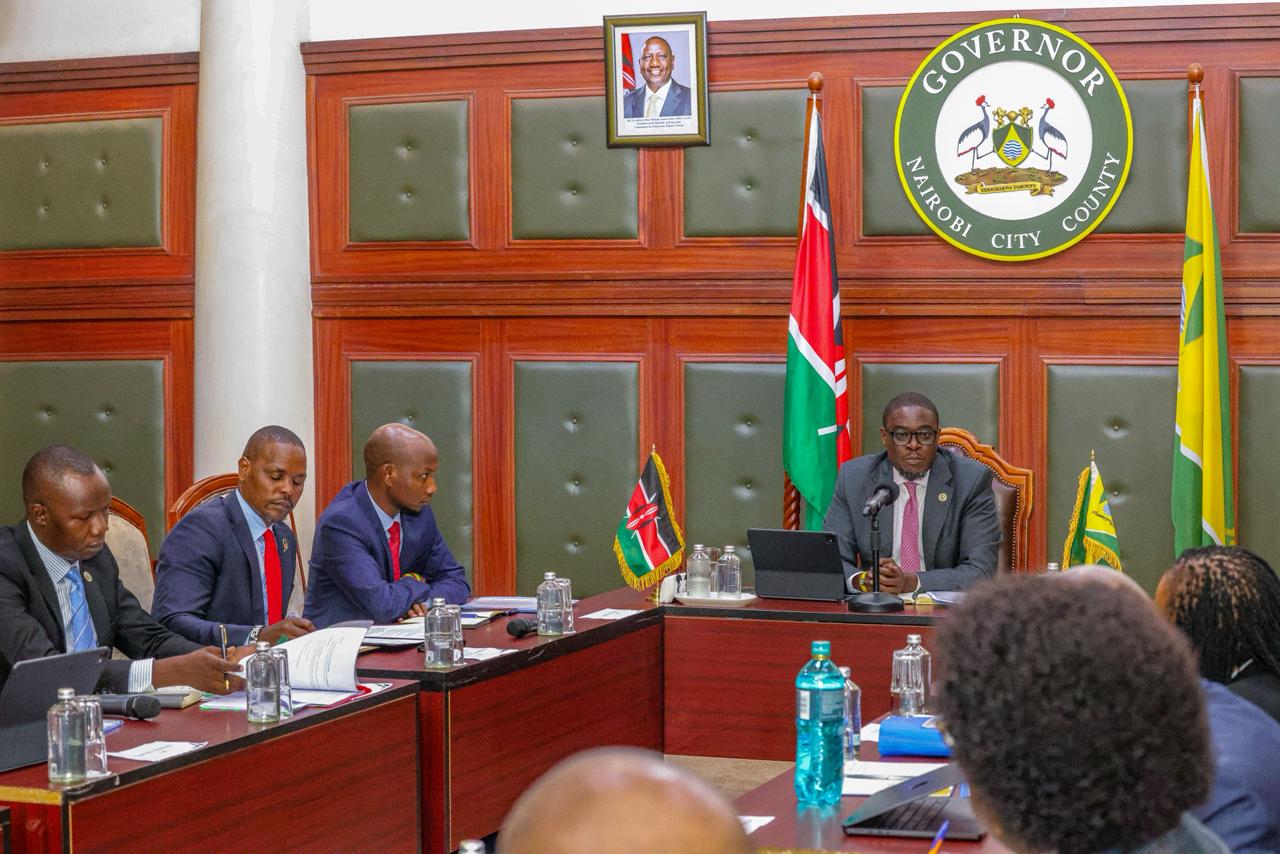
He also noted that virtual meetings may be used to ensure flexibility, acknowledging that many of the officials involved have demanding schedules.
Sakaja said Nairobi is fortunate that national government leaders are willing to dedicate regular time to address issues affecting the capital.
The governor added that such an arrangement should have been established more than a decade ago, revealing that the idea first came to him while he was serving as Nairobi senator.

The inaugural meeting mainly focused on setting procedures, establishing committees, and developing a work plan for implementation.
Key areas targeted in the agreement include roads, infrastructure development, housing, and improved service delivery.
Sakaja also said the discussions come at a time when heavy rains and flooding have recently affected the city, causing deaths and disrupting the lives of many residents.
The steering committee, he explained, will provide overall policy direction and is expected to meet quarterly, although additional meetings may be convened if necessary.
Those present at the meeting included Deputy Governor Njoroge Muchiri, officials from the Office of the Prime Cabinet Secretary, the Ministry of Devolution, the National Treasury, the Nairobi Rivers Commission, county executive members, Environment Principal Secretary Festus Ng’eno, and National Environment Management Authority Director General Mamo Mamo, among others.

The cooperation agreement was formally signed on February 17 at State House. It was endorsed by Prime Cabinet Secretary Musalia Mudavadi on behalf of the national government and Governor Sakaja for Nairobi City County.
Leaders said the pact, anchored in Section 6 of the Urban Areas and Cities Act, establishes a structured partnership between the two levels of government and is expected to unlock billions of shillings for urban development in the capital.
President William Ruto, who witnessed the signing, dismissed concerns that the agreement could amount to the national government taking over county functions.
“What we are formalising today is not a transfer of functions. Let me repeat, there is no transfer of functions taking place. I have no interest in running the city; my hands are already full,” the president said.
He emphasized that Governor Sakaja and the county administration will continue to manage Nairobi’s affairs.