The Lower Eastern Times Opening The Third Eye
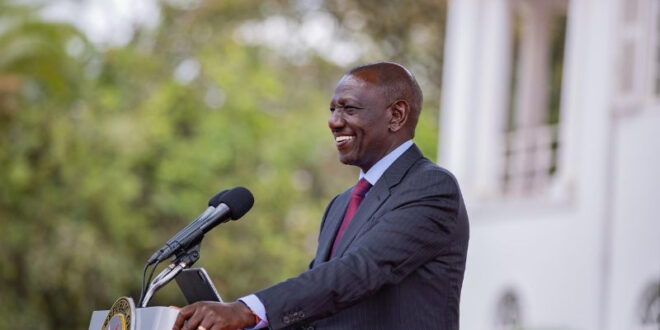
President William Ruto has reaffirmed his commitment to proceeding with his administration’s affordable housing initiatives, despite the Court of Appeal’s recent decision not to suspend a High Court order deeming the housing levy unconstitutional.
Addressing the public in Kiutine, Meru County on Friday, Ruto underscored that despite the court’s ruling, he has garnered substantial public backing to advance the housing programs, which he believes will generate numerous employment opportunities for Kenyan youth.
He likened the apparent public endorsement to receiving a directive from a higher power.
“When it comes to housing, should it proceed or not? Those advocating for housing to continue, let me see your hands. Aren’t you the ones shaping the course of this nation? Is there any form of public participation greater than yours? Your command is God’s command. Therefore, I have received ample support and will forge ahead with housing,” stated Ruto.
In its ruling on Friday, the Court of Appeal upheld the High Court’s finding that the Housing Levy was implemented without a proper legal framework.
“The trial Court held that the Housing Levy was introduced without a legal framework. It also held that the levy was targeting a section of Kenyans. In our view, public interest lies in awaiting the determination of the appeal,” reads an excerpt from the court’s ruling.
The ongoing dispute over the Housing Levy has led to clashes between members of the ruling Kenya Kwanza government and opposition-aligned lawmakers regarding its implementation.
Raila Odinga, leader of the Azimio la Umoja coalition, has urged all employers to cease remitting the housing levy in compliance with the High Court ruling.
Nevertheless, Ruto maintains that the housing plan remains a fundamental pillar of his administration.
Deputy President Rigathi Gachagua has similarly urged the Judiciary to consider the broader societal ramifications of its decisions, arguing that the levy is facilitating large-scale housing construction to address Kenya’s housing deficit.