The Lower Eastern Times Opening The Third Eye

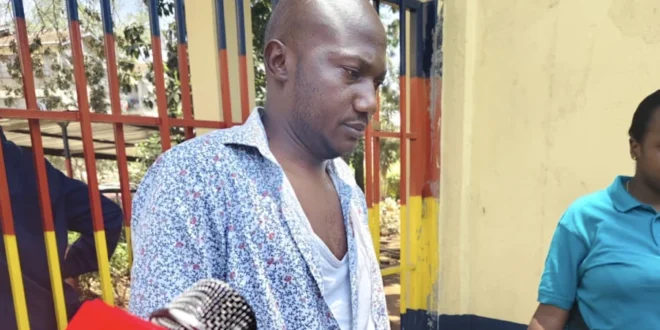
Citizen TV journalist Francis Ode has recounted a frightening experience following his arrest and alleged assault by police officers while covering protests against rising fuel prices in Nairobi.
Ode said he feared for his life while in police custody, particularly because he was being held at the same police station where teacher and blogger Albert Ojwang died while in custody.
Click here to join our WhatsApp Channel
The journalist was eventually released after spending time at Central Police Station, but questioned what could have happened to him during his detention.
“I was very afraid because I was in a place where I had previously reported on the death of Albert Ojwang, who lost his life while inside that station,” Ode recounted.
He said the experience made him reflect on his own safety and whether he could become the subject of a similar report to those he had covered in the course of his work.
Ode explained that he had been assigned to cover demonstrations organised by activists protesting recent fuel price increases announced by President William Ruto’s administration.
While recording events in Nairobi’s Central Business District (CBD), he said police officers began pursuing demonstrators before one uniformed officer allegedly instructed colleagues to arrest him as well.
According to the journalist, he was positioned among fellow members of the media and was filming when the officer approached and ordered his colleagues to apprehend him.
Ode said he questioned why he was being targeted, identifying himself as a journalist. He alleged that the officers who moved to arrest him were dressed in civilian clothing and neither identified themselves nor explained the reason for his arrest.
He said he shouted and attempted to defend himself as the officers moved in, fearing for his safety despite repeatedly telling them that he was working as a journalist.
The reporter was subsequently bundled into a police Land Cruiser alongside three other individuals, whom he identified as two activists and another man.
Ode said the other occupants of the vehicle also attempted to explain to the officers that he was a journalist and should not have been arrested, but their pleas were allegedly ignored as the vehicle proceeded to the police station.
He further alleged that officers physically assaulted him during the arrest, squeezing him and tearing his clothes as they struggled with him inside the vehicle.
According to Ode, the confrontation continued even after they arrived at Central Police Station, leaving him distressed over how he had been treated.
Upon arrival, he said he was taken to a holding area near the cells, where his fears intensified because of the circumstances surrounding Ojwang’s death.
The journalist also questioned the conduct of the officers involved in his arrest, insisting that they should have identified themselves and sought an explanation from him before taking him into custody.
Ode said photographs had been taken of some of the officers and the events surrounding the incident, which he believes could help establish what happened.
He expressed gratitude to fellow journalists and members of the public who reached out to him and visited the station to establish his whereabouts and check on his welfare.
The reporter said he was eventually released after speaking with Patrick Gogo, the Officer Commanding Police Division (OCPD) at the station.
However, Ode said he was not informed of the details entered in the police Occurrence Book (OB) and was simply instructed to leave.
The incident has drawn condemnation from Royal Media Services (RMS) Editorial Director Linus Kaikai, who criticised the police over the alleged use of excessive force against the journalist and unarmed demonstrators.
The incident has renewed concerns about press freedom, police accountability and the safety of journalists covering demonstrations in Kenya.